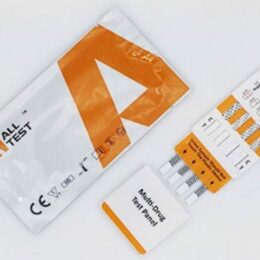
A drug test is a practical way to determine whether drugs or their residues may be present in a sample. Drug tests are used for different purposes and can be performed using various sample types, such as urine, saliva, hair, sweat, or blood. In addition, drugs can be detected from materials, drinks, and environmental samples through powder and surface testing.
Most drug testing is carried out using rapid tests designed for quick and convenient screening in different situations. A rapid drug test indicates whether drugs or their metabolites can be detected in the sample, but it does not determine the exact time of use, quantity, or level of impairment. When necessary, results can be confirmed through laboratory analysis.
Types of Drug Tests and Their Uses
💧 Drug Test Using a Urine Sample
A urine drug test is based on detecting metabolites formed and stored in the body after drug use. Detection times in urine depend on the substance tested, the amount used, and the timing of use. Urine testing is one of the most commonly used drug testing methods and is suitable when there is a need to determine whether drugs have been used during the past few days.
💬 Drug Test Using Saliva
Saliva drug tests are suitable for situations where current or very recent drug use needs to be assessed. Sample collection is fast, and manipulation of the sample is generally more difficult than with urine testing. Detection windows are shorter than with urine tests, making saliva testing particularly suitable for assessing recent use, such as in roadside testing or workplace screening.
🥤 Drug Test of a Drink or Other Liquid
Drug tests for drinks or other liquids are intended for situations where there is a need to determine whether a beverage may have been spiked with drugs or sedative substances. In these tests, the sample is the drink itself, and the analysis focuses on substances added to it rather than on the body’s metabolites. Only tests specifically designed and approved for liquid samples according to the manufacturer’s instructions should be used for this purpose.
🧬 Drug Test Using a Hair Sample
Hair drug testing is suitable for assessing possible drug use over a longer period of time. Drug residues bind to keratin in hair and remain detectable as long as the hair grown at the time of use is present. Hair testing allows detection long after use but is not suitable for assessing recent or acute drug influence.
🏠 Drug Tests for Materials and Environmental Samples
Drug tests for materials and environmental samples are used in situations where suspicious powder, tablets, or possible drug residues are found, for example after a party, at home, in the workplace, or in other environments. Samples can be taken directly from the suspected substance or as surface swabs from areas such as tables, countertops, floors, or objects. These tests are sensitive and capable of detecting even very small amounts of drugs and their residues.
Material and surface drug tests do not indicate who used the substance, when it was used, or its origin. However, they provide a fast and practical way to assess whether the found material may be drug-related and whether further action should be considered.
Frequently Asked Questions About Drug Tests
Which drug test should I choose?
The choice of drug test depends on whether the goal is to assess very recent use, use within the past few days, or longer-term patterns of drug use. Saliva tests are suitable for recent use, urine tests for use within recent days, and hair tests for longer-term assessment.
How long can drugs be detected in a drug test?
Detection times vary depending on the substance, test method, amount used, frequency of use, and individual factors. Saliva tests generally have shorter detection windows than urine tests, while hair tests can reflect use over several months.
Can a drug test be performed at home?
Most rapid drug tests are designed for simple use according to the manufacturer’s instructions. If needed, a positive result can be confirmed through laboratory analysis.
What does a drug test show?
A drug test indicates whether drugs can be detected in the sample above the established cut-off levels. It does not determine the exact time of use or the level of impairment.
Can suspicious powder or a drink be tested?
Yes. Powder and surface drug tests are designed to analyze suspected materials, and specific tests are available for drinks and liquid samples. It is important to use a test that is intended for the specific type of sample.
 Drug tests
 Drug tests