

What does the Vitamin D rapid test measure and who is it for?
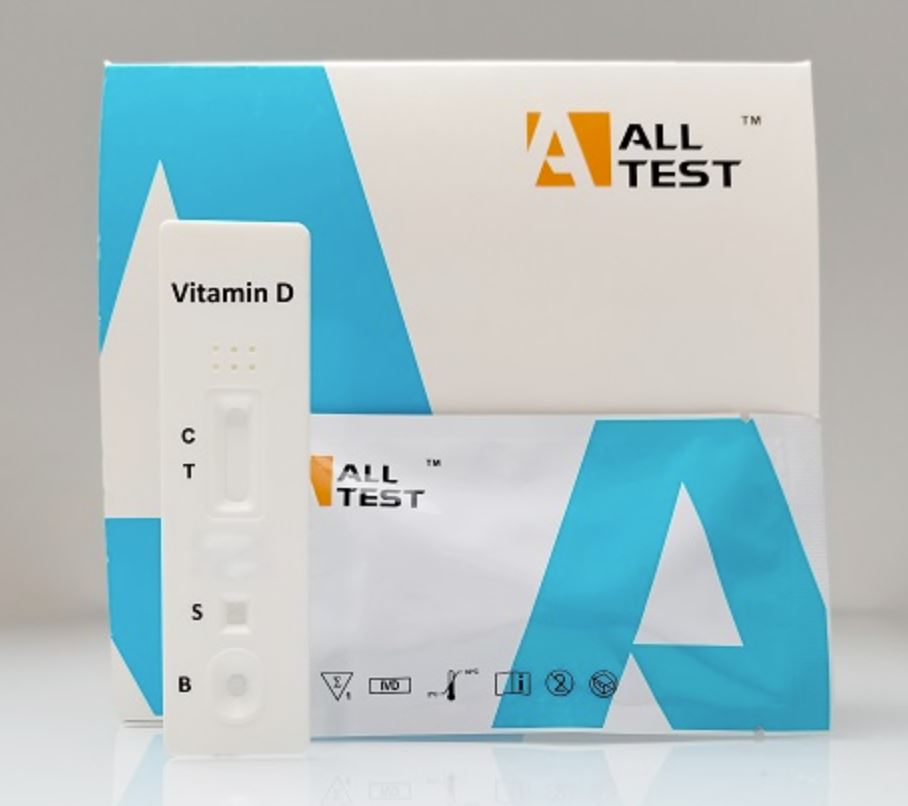
The test detects 25-hydroxyvitamin D, 25(OH)D, in finger-prick whole blood. This marker is used to assess vitamin D status. The test gives a preliminary semi-quantitative colour range, not an exact laboratory value.
Why choose a Vitamin D test for home use?
The test is useful when you want a preliminary home assessment, for example because of limited sun exposure, low dietary vitamin D intake or a previously low level. Read the result at 10 minutes. A result that is abnormal or does not match your symptoms should be assessed by a healthcare professional.
How is the sample collected and the test performed?
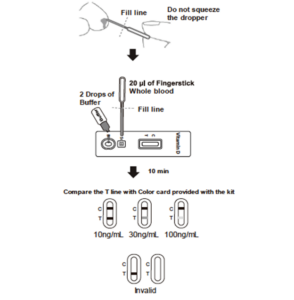
Allow the test and materials to reach room temperature. Wash your hands with warm water, dry them and clean the side of the middle or ring finger with the alcohol pad. Use the lancet and fill the capillary dropper to the marked line without air bubbles. Dispense the blood into specimen well S and add two drops of buffer to buffer well B. Always follow the diagrams and instructions supplied with the test.
When is the result read and how is it interpreted?
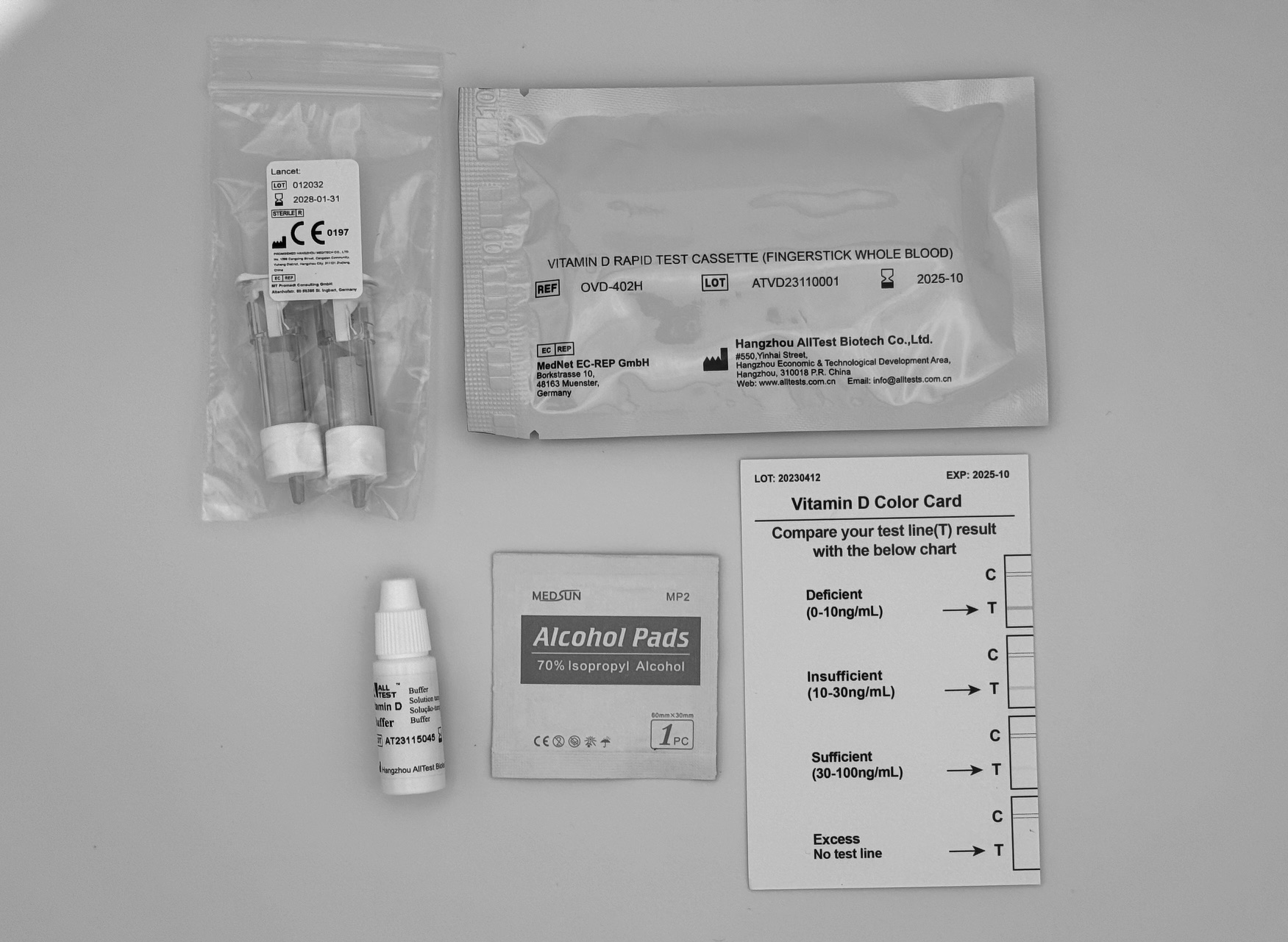
Read the result at 10 minutes and compare the T-line intensity with the colour card from the same pack. Do not interpret the result after 20 minutes.
- Deficient: 0–10 ng/mL (0–25 nmol/L)
- Insufficient: 10–30 ng/mL (25–75 nmol/L)
- Sufficient: 30–100 ng/mL (75–250 nmol/L)
- Possible excess: the C line appears but the T line does not; consult a doctor
- Invalid: the C line does not appear; repeat with a new cassette
What does an abnormal result mean?
A deficient or insufficient result indicates a 25(OH)D level below 30 ng/mL according to the test. Show the result to a healthcare professional, who can assess the need for laboratory testing and vitamin D supplementation. A sufficient result does not exclude other causes of symptoms or the rare possibility of excess vitamin D.
How accurate is the test?
In the manufacturer’s clinical comparison of 90 whole-blood samples, overall agreement with the predicate device was 94.4%. Agreement was over 99.9% for the deficient range, 94.6% for the insufficient range and 93.3% for the sufficient range. Too little blood, an incorrect number of buffer drops or incorrect reading time can affect the result.
What is included and how should the test be stored?
The pack contains a test cassette, buffer, lancet, alcohol pad, capillary dropper, colour card and package insert. A timer is also required. The product is a CE 0123-marked medical device for home use. Store dry at 2–30 °C and do not freeze. Use the cassette within one hour of opening the foil pouch.
See our other health tests and read the manufacturer’s instructions for use.
Order the Vitamin D rapid test when you want a preliminary assessment of your 25(OH)D level at home in 10 minutes.