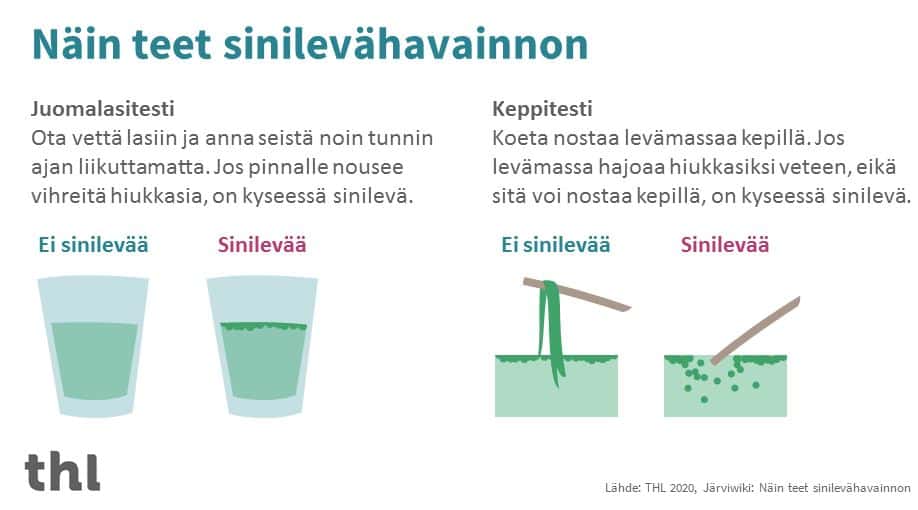
A free blue-green algae test can be carried out at the shore with a clear glass or a stick. In the glass test, blue-green algae particles rise to the surface in about an hour. In the stick test, blue-green algae break into small particles instead of hanging from the stick as strands. These methods help identify blue-green algae, but they do not show whether the bloom produces toxins.
What does blue-green algae look like?
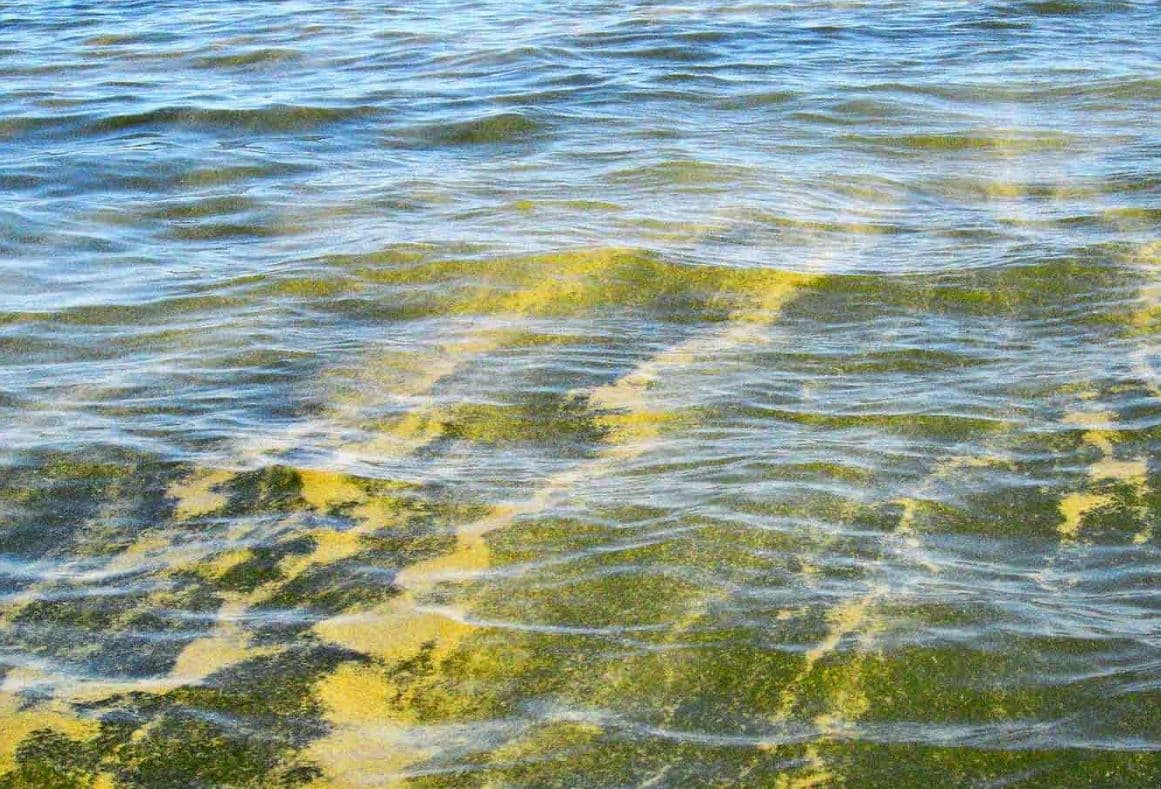
A small amount usually appears as greenish or yellowish particles in the water. A heavier bloom may form streaks or mats on the surface and accumulate along the shoreline.
Blue-green algae can resemble pollen or filamentous algae. Pollen often settles on docks and other surfaces as well as on the water, and it is most common in spring and early summer. Blue-green algae are usually most abundant in mid- and late summer as the water warms.
Conditions can change quickly with wind and currents. Always check the water before swimming or using it, even if no algae were visible at the same location earlier.
How to perform the glass test
- Collect water in a clear glass from the area where you suspect blue-green algae.
- Leave the glass undisturbed for about one hour.
- If greenish particles rise to the surface, the water probably contains blue-green algae.
The result applies only to the sample and the time at which it was collected.
How to perform the stick test
Try to lift the visible algae with a stick. If the material hangs from the stick as strands, it is probably another type of algae. If it breaks into small particles and does not stick to the stick, it may be blue-green algae.
Found blue-green algae? Identification and toxin testing answer different questions
The glass and stick tests help identify blue-green algae. They do not show whether the water contains toxins produced by the algae. A BlueGreenTest® rapid test can provide additional information about the hepatotoxins recognised by the test in a water sample.
The result applies only to the collected sample and the compounds recognised by the test. A negative result alone does not show that visibly algae-contaminated water is safe, because blue-green algae may produce other harmful compounds and conditions can change quickly.
Can you swim in water containing blue-green algae?
Avoid swimming and other water activities when blue-green algae are visible. Toxic and non-toxic blooms cannot be distinguished by sight. Children and pets should be kept out of affected water, and the water must not be swallowed.
Do not use water containing blue-green algae for drinking, cooking, washing, sauna steam or watering edible plants.
What should you do after exposure?
If you suspect that you have swum in water containing blue-green algae, wash thoroughly with clean water and rinse your eyes. Wash a pet that has entered the water so it cannot lick contaminated water from its coat.
Exposure may cause skin or eye symptoms, nausea, vomiting, headache, fever or weakness. Contact local healthcare or poison information services if symptoms occur or poisoning is suspected. Contact a veterinarian if an animal develops symptoms.
Where can I check current algae observations?
Observations in Finland are available on the Vesi.fi blue-green algae map. Conditions may differ between parts of the same body of water and change quickly, so a map does not replace checking the water at your own shoreline.
Would you like to test a water sample for hepatotoxins?
The BlueGreenTest® rapid test is intended for testing a water sample. It provides additional information about the hepatotoxins recognised by the test, but it does not replace visual assessment and does not cover every harmful compound that blue-green algae may produce.