“`html
Mold infections are rare, but in severe cases they can be serious and even life-threatening. The risk is highest in people whose immune systems have been weakened by illness, medication or another medical condition. In healthy people, ordinary exposure to mold spores at home or in the workplace does not usually lead to an actual mold infection.
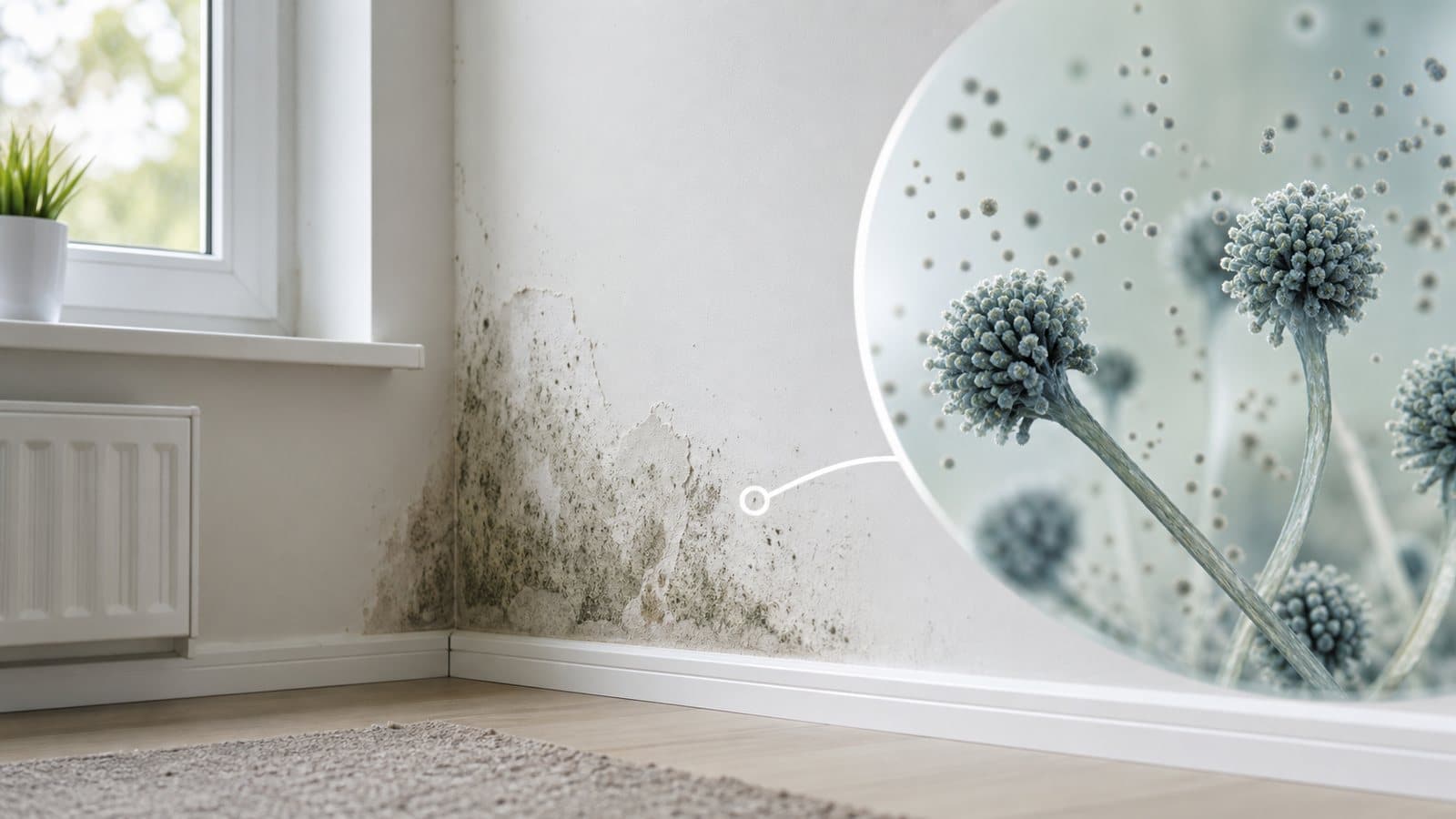
Mold exposure and a mold infection are not the same thing. Exposure related to moisture or mold damage in a building may irritate the respiratory tract, worsen asthma or cause allergy-like symptoms. In an invasive mold infection, however, the fungus enters tissues, blood vessels or internal organs.
A study published by the US Centers for Disease Control and Prevention in 2026 highlighted how serious invasive mold infections can be. However, the findings should not be interpreted as meaning that ordinary household mold poses the same risk to everyone exposed to it.
Can mold cause an infection? Yes, but true mold infections are uncommon and mainly affect people with weakened immune systems. Most healthy people exposed to mold are more likely to experience irritation or allergy-related symptoms than a fungal infection. Serious conditions such as invasive aspergillosis require medical diagnosis and treatment.
What is a mold infection?
A mold infection develops when a disease-causing mold enters the body and begins to grow in the lungs, sinuses, skin or other tissues. Most serious infections begin when fungal spores are inhaled. Less commonly, mold may enter the body through a wound, damaged skin or a contaminated medical device.
Diseases caused by molds can be broadly divided into three groups:
- Allergic reactions, in which the immune system reacts to inhaled mold spores.
- Localised or chronic infections, which may develop in previously damaged lungs, sinuses or other tissues.
- Invasive mold infections, in which the fungus enters tissues or blood vessels and may spread to other organs.
Invasive infections are the most serious form. The CDC defines them as infections that affect blood vessels, deep tissues or internal organs. They occur particularly in people whose ability to fight infection is severely weakened.
Mold exposure and mold infection are not the same
| Mold exposure | Mold infection |
|---|---|
| Mold spores or other microbial contaminants are inhaled or encountered in the environment. | Mold grows in a tissue or organ in the body. |
| May be associated with moisture damage in a building. | Is often associated with a weakened immune system or serious illness. |
| May irritate the respiratory tract, trigger allergy symptoms or worsen asthma. | May cause fever, coughing, shortness of breath and a severe systemic infection. |
| Does not mean that the person has a fungal infection. | Diagnosis requires medical examinations. |
| The building and the possible source of exposure can be investigated. | Treatment is always provided by healthcare professionals. |
Finding mold or microbes in a building does not prove that an occupant has a mold infection. Likewise, symptoms alone cannot confirm that a building has moisture or mold damage. A person’s health and the condition of the building are assessed using different methods.
What does the CDC study reveal about severe mold infections?
The CDC monitored invasive mold infections in four hospitals and affiliated outpatient facilities in the Atlanta area between 2020 and 2024. Researchers identified 449 confirmed or probable invasive mold infections.
Approximately one-third of the patients died during hospitalisation. Among patients diagnosed between 2020 and 2023 for whom 90-day follow-up information was available, 45% died during the follow-up period.
This figure represents all-cause mortality. The study therefore did not show that the mold infection alone caused every death. Many patients were already seriously ill, and several had an underlying disease or treatment that weakened their immune system.
According to the study, 65% of patients had at least one recognised risk factor for an invasive mold infection. However, 35% did not have one of the predefined risk factors included in the study. This does not mean that more than one-third of the patients were completely healthy, as they may have had other illnesses or factors that increased their susceptibility to infection.
A current or recently diagnosed COVID-19 infection was associated with more severe illness. Among these patients, 66% required intensive care, compared with 39% of the other patients. All-cause mortality within 90 days was also higher in cases associated with COVID-19.
Which molds can cause infections?
Several types of mold found in the environment can cause serious infections. In the CDC study, the most common were fungi belonging to the Aspergillus genus, which were identified in 71% of cases.
The most frequently identified individual species was Aspergillus fumigatus, found in 21% of all cases. Aspergillus fungi are common in soil, decaying vegetation, compost, dust and both outdoor and indoor air.
Other groups of molds that can cause invasive infections include:
- Mucorales fungi, which can cause mucormycosis
- Fusarium species
- Scedosporium and Lomentospora species
- certain darkly pigmented molds
A mold species cannot be reliably identified from the colour or appearance of visible growth. Finding a particular mold in a building also does not show whether it is causing symptoms or an infection in a specific person.
What is aspergillosis?
Aspergillosis is a general term for diseases caused by Aspergillus fungi. There are several forms of aspergillosis, and their symptoms and severity vary.
Allergic aspergillosis
In allergic aspergillosis, the immune system reacts strongly to Aspergillus spores. It can occur particularly in people with asthma or cystic fibrosis. Symptoms may include wheezing, coughing and worsening asthma symptoms.
Chronic pulmonary aspergillosis
Chronic aspergillosis may develop in people whose lungs have already been damaged by another disease. It usually progresses more slowly than invasive aspergillosis and may cause a persistent cough, fatigue, weight loss or coughing up blood.
Invasive aspergillosis
Invasive aspergillosis is a serious infection in which the fungus grows into lung tissue and may spread through blood vessels to other parts of the body. It occurs particularly in people with severe immune suppression or critical illness.
Who is at risk of an invasive mold infection?
The risk of a severe mold infection is highest when the immune system cannot eliminate inhaled fungal spores effectively.
Risk groups may include:
- people with blood cancers such as leukaemia
- stem cell or organ transplant recipients
- people receiving chemotherapy or other strongly immunosuppressive treatment
- people using high-dose or long-term corticosteroid medication
- patients with severe neutropenia
- critically ill patients receiving intensive care
- people who have had severe influenza or COVID-19
- people with severe or advanced lung disease
Older age alone does not automatically mean that a person is severely immunocompromised. However, illnesses and treatments that affect immune function become more common with age.
What symptoms can a mold infection cause?
Symptoms depend on the type and location of the infection, the mold involved and the person’s underlying health. Possible symptoms of invasive pulmonary aspergillosis include:
- fever that does not improve with conventional antibiotic treatment
- coughing
- shortness of breath
- chest pain
- coughing up blood
- severe fatigue and deterioration in general health
These symptoms are not specific to a mold infection. Similar symptoms occur in many more common respiratory and lung conditions. A mold infection therefore cannot be identified from symptoms alone at home.
If a severe infection spreads beyond the lungs, symptoms may affect the skin, eyes, central nervous system or other organs. This is a medical emergency that requires hospital treatment.
Can household mold cause a life-threatening infection?
Environmental mold spores can theoretically be inhaled anywhere, including at home. In most healthy people, however, the immune system removes these spores effectively and prevents an infection from developing.
Moisture or mold damage in an ordinary building therefore does not mean that occupants are at risk of developing an invasive mold infection. Health effects associated with damp or mold-damaged buildings are generally different from deep fungal infections.
Nevertheless, people in high-risk groups should take environmental mold exposure seriously. Flooding, extensive water damage and renovation work may release large amounts of dust and mold spores into the air. A treating healthcare unit may provide individual advice on environments or renovation situations that a severely immunocompromised person should avoid.
How are mold infections diagnosed?
A mold infection cannot be diagnosed with an indoor air test, a home mold test or symptoms alone. Diagnosis is carried out by healthcare professionals and may require the results of several examinations to be considered together.
Possible examinations include:
- a chest X-ray or computed tomography scan
- blood tests and fungal antigen testing
- cultures from respiratory or tissue samples
- PCR tests that detect fungal genetic material
- a sample collected during bronchoscopy
- a tissue biopsy when necessary
A suspected indoor air problem and a person’s illness are investigated separately. A finding from a building is not a medical diagnosis, and a negative building sample does not rule out an illness.
How are mold infections treated?
Treatment depends on the mold involved, the location and severity of the infection and the patient’s overall health. Invasive mold infections are treated with antifungal medication, often initially in hospital.
In some situations, surgery may also be required to remove damaged or infected tissue. Whenever possible, factors weakening the immune system are also reduced. Treatment may be prolonged, and the same antifungal medicine is not effective against every type of mold.
Home mold tests and indoor air tests cannot be used to select or monitor medical treatment.
When should indoor air or a building be investigated?
Investigating indoor air, surfaces or building structures may be appropriate if there are signs such as:
- visible mold growth or recurring discolouration
- a persistent musty or cellar-like smell
- moisture marks, leaks or peeling surfaces
- previous water damage that may not have been dried properly
- recurring symptoms that appear in the building and improve elsewhere
Indoor air and surface tests may provide preliminary information about the sample being tested when used according to the manufacturer’s intended purpose. However, they do not determine the location or extent of structural damage and do not replace a professional building investigation.
Explore Testerit.com’s indoor air and home mold tests. You can also read the pillar guide Indoor air testing and the guide When should you perform an indoor air test?
Possible signs of mold and microbial contamination are discussed in more detail in the article How to identify possible mold or microbes in indoor air.
Can flooding and climate change increase the risk?
Floods, storms and other events that cause extensive water damage can increase the likelihood of moisture and mold damage in buildings. Removing damaged materials and handling dried mold growth may also release increased amounts of dust and fungal spores into the air.
The CDC has suggested that extreme weather events associated with climate change may increase the importance of mold exposure in the future. At the same time, an ageing population and increased use of treatments that affect immune function may increase the number of people vulnerable to severe infections.
However, the CDC study conducted in Atlanta hospitals did not determine where individual patients had been exposed. The infections cannot therefore be directly linked to their homes, workplaces or hospital buildings.
When should symptoms be assessed by a doctor?
Most mild respiratory symptoms are not caused by an invasive mold infection. However, medical advice should be sought if respiratory symptoms persist, worsen or are accompanied by a clear deterioration in general health.
Urgent medical assessment is particularly important if a person in a high-risk group develops:
- persistent or high fever
- worsening shortness of breath
- chest pain
- coughing up blood
- confusion or rapidly worsening general health
In the event of severe breathing difficulties or another medical emergency, contact the local emergency services immediately.
Summary of mold infections
Mold-related diseases range from allergic reactions and chronic lung conditions to rare invasive infections. Severe mold infections mainly affect people whose immune systems are weakened or who are critically ill.
Ordinary mold exposure in a building does not mean that a person has a mold infection. Moisture and mold damage should still be investigated because they may affect indoor air quality, contribute to irritation or allergy-related symptoms and damage the building.
An indoor air test may support a preliminary assessment of a building, but it cannot diagnose illness in a person. A suspected mold infection must always be investigated and treated by healthcare professionals.
Frequently asked questions about mold infections
Can a healthy person develop a mold infection?
Yes, but a severe invasive mold infection is extremely rare in a healthy person. The greatest risk is in people with a weakened immune system, critical illness or severe underlying lung disease.
Are mold infections contagious?
Most mold infections do not spread from person to person. They usually develop after environmental spores are inhaled or enter the body through a wound.
Can mold cause pneumonia?
Some molds can cause a lung infection that resembles pneumonia. However, this is much less common than bacterial or viral pneumonia and mainly affects people in recognised risk groups.
What is the difference between mold exposure and aspergillosis?
Mold exposure means coming into contact with mold spores or other microbial contaminants in the environment. Aspergillosis is a disease caused by Aspergillus fungi and may be allergic, chronic or invasive.
Can an indoor air test detect a mold infection?
No. An indoor air test examines a sample collected from a building or its indoor air. It cannot diagnose a mold infection in a person. Diagnosis requires a medical assessment and may include imaging, blood tests, respiratory samples or tissue biopsies.
Does finding Aspergillus in a home mean that the occupants will become ill?
No. Aspergillus fungi are common in the environment, and most people inhale their spores without becoming ill. Finding Aspergillus may justify investigating the source of moisture and the condition of the building, but it does not by itself demonstrate a health hazard or infection.
How quickly does a mold infection develop?
The speed depends on the type of infection and the person’s overall health. An invasive infection may progress rapidly in a severely immunocompromised patient, whereas chronic pulmonary aspergillosis may develop over months or years.
Can a mold infection be detected with a blood test?
In some cases, blood tests can detect fungal antigens, antibodies or genetic material. However, a single blood test cannot always confirm or rule out an infection. Diagnosis is based on the overall clinical assessment and a combination of test results.
How are mold infections diagnosed?
Mold infections are diagnosed by healthcare professionals using symptoms, medical history, imaging studies and laboratory examinations of blood, respiratory or tissue samples. An indoor air test cannot diagnose an infection.
When should you perform an indoor air test?
An indoor air test may be considered if a building has a musty smell, visible mold growth, signs of moisture damage, previous water damage or recurring symptoms associated with spending time in the building. The results should be interpreted together with observations of the building and, where necessary, a professional building investigation.
Sources
- CDC: Active Surveillance for Invasive Mold Disease — Four Hospitals, Atlanta, Georgia, 2020–2024
- CDC: About Invasive Mold Infections
- CDC: Symptoms of Aspergillosis
- NHS: Aspergillosis
- Tekniikka & Talous: Mold can cause a life-threatening infection – nearly half of patients died within 90 days
“`