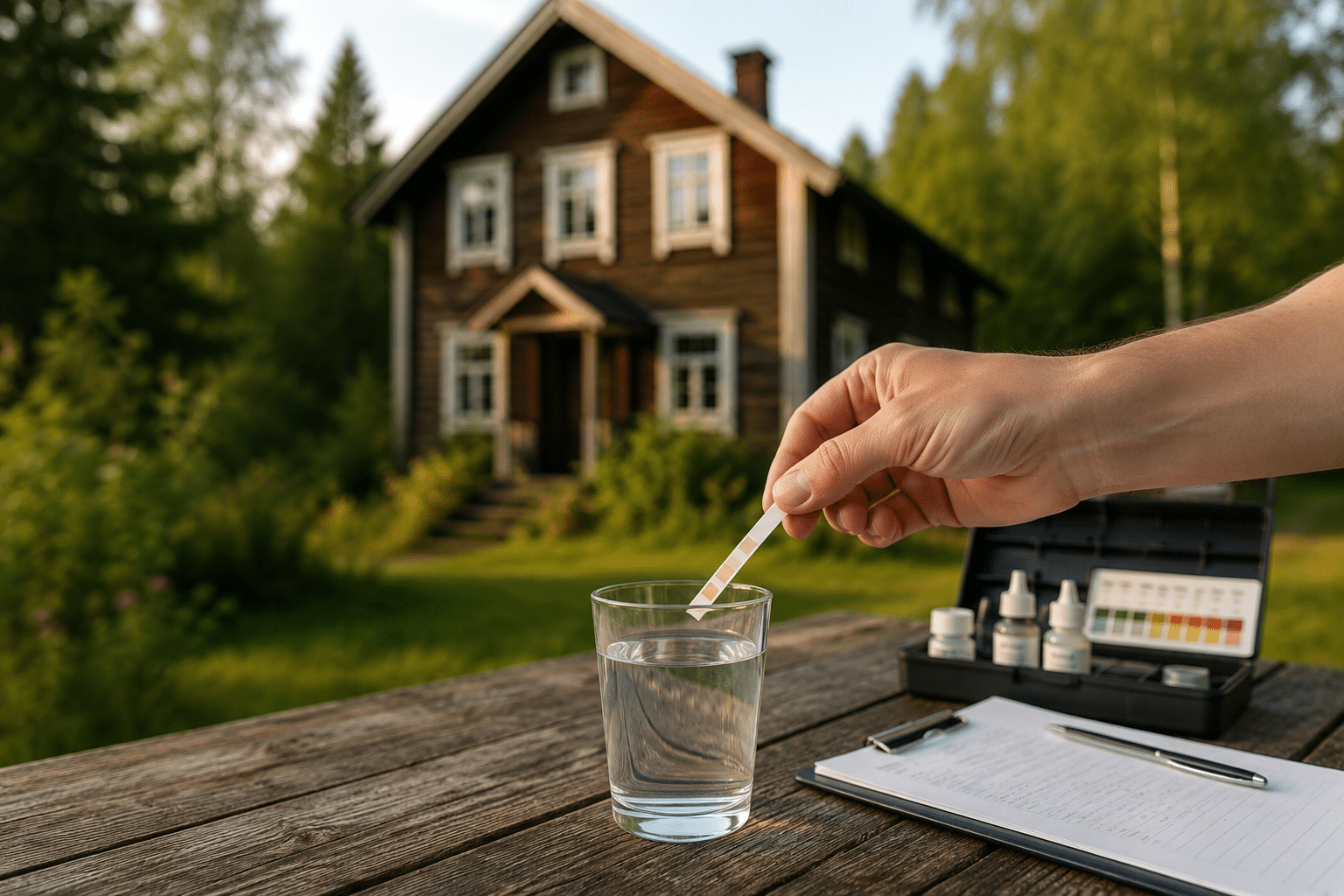
Updated 19 November 2026. Well water quality needs both microbiological and chemical assessment. Clear, pleasant-tasting water may still contain contaminants. Choose the analysis according to the well, local geology, nearby activities and who drinks the water. A home test can monitor selected parameters; it cannot provide a complete drinking-water safety assessment.
What should well water be tested for?
A useful testing plan combines indicators of microbial contamination with relevant chemicals and basic water properties. Ask a drinking-water laboratory or your local health authority which analyses suit the area. An isolated normal result should not be interpreted as proof that every aspect of water quality is acceptable.
Bacteria and contamination indicators
Common microbiological investigations include E. coli and coliform bacteria. Their interpretation depends on the analytical method and the sample. A laboratory report helps establish what an abnormal finding means and which follow-up actions are needed.
Chemicals and local geology
Nitrate and nitrite may be relevant where wastewater, fertilisers or other pollution sources affect groundwater. Depending on the region and well type, arsenic, fluoride, manganese, iron, uranium or radon may also require investigation. Local advice matters: the relevant risks are not identical for every well.
pH, hardness and alkalinity
These measurements describe different water properties and can help investigate corrosion, deposits and treatment requirements. They do not replace tests for microorganisms or harmful chemicals. Colour and taste can help identify a change, but cannot identify its cause reliably.
How often should a private well be tested?
Follow the recommendations and requirements where the well is located. In the United States, CDC recommends at least annual testing for total coliforms, nitrate, total dissolved solids and pH, with additional tests for local concerns. This is US guidance, not a universal schedule for every country. Test sooner if water characteristics change or contamination is suspected.
What should you do after flooding or other changes?
Flooding, repairs, a new well or nearby land-use changes may justify additional testing. If the water may be contaminated, obtain a safe alternative drinking-water supply and seek local health advice while the problem is investigated. Boiling does not remove chemical contaminants. Use a suitable laboratory assessment before relying on the water again.
Can a home water test replace laboratory analysis?
A home test provides information only about the parameters and measurement range stated in its instructions. For a wider assessment, an unexplained abnormal result or an official purpose, use a laboratory approved or accredited for the required analyses. Confirm sample bottles, storage, delivery conditions and the service area before ordering.
Frequently asked questions about well water
Can clear water be unsuitable to drink?
Yes. Some microbes and chemicals are not apparent from appearance, taste or smell. Testing is needed to assess the relevant risks.
How do you check that a filter works?
Select treatment after identifying the problem. When appropriate, compare samples before and after treatment for the substances the system is designed to remove. Follow the laboratory’s sampling advice and maintain the equipment as instructed.
Choose the next step
Explore the water test range or read the guide to choosing a water test. Product pages show the parameters included and the limits of each option.
Sources and review date
Reviewed 19 November 2026. CDC: Guidelines for Testing Well Water; US EPA: Protect Your Home’s Water; Vesi.fi: well water quality.