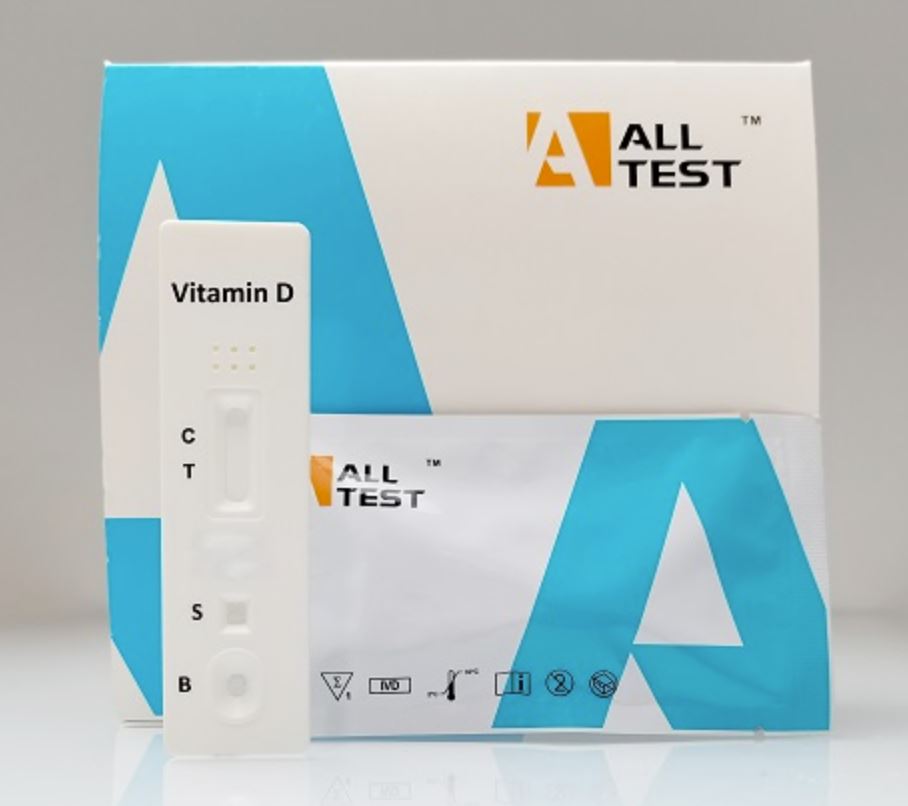


What does a vitamin D test measure and who is it suitable for?
The vitamin D test detects 25-hydroxy vitamin D, or 25(OH)D, in fingertip blood, which is used to assess vitamin D status. The test provides a preliminary semi-quantitative result: it places the concentration in one of the areas of the color chart, but does not provide an exact laboratory value.
Why choose a vitamin D test at home?
The test is suitable for a situation where you want to get a preliminary assessment of your vitamin D level at home, for example, due to low sunlight, low vitamin D intake or a previously diagnosed low level. The result is read in 10 minutes. An abnormal result or a result that is unclear in relation to the symptoms must be confirmed by the health care provider.
How is a fingertip blood sample taken and the test performed?
Bring the test and equipment to room temperature. Wash your hands with warm water, dry them, and clean the side of your middle or ring finger with an alcohol swab. Collect the sample with the lancet and fill the capillary pipette to the marked line without air bubbles. Transfer the blood into the sample well marked S on the test cassette and add two drops of buffer to the buffer well marked B. Always follow the instructions and illustrations supplied with the test.
When is the result read and how is it interpreted?
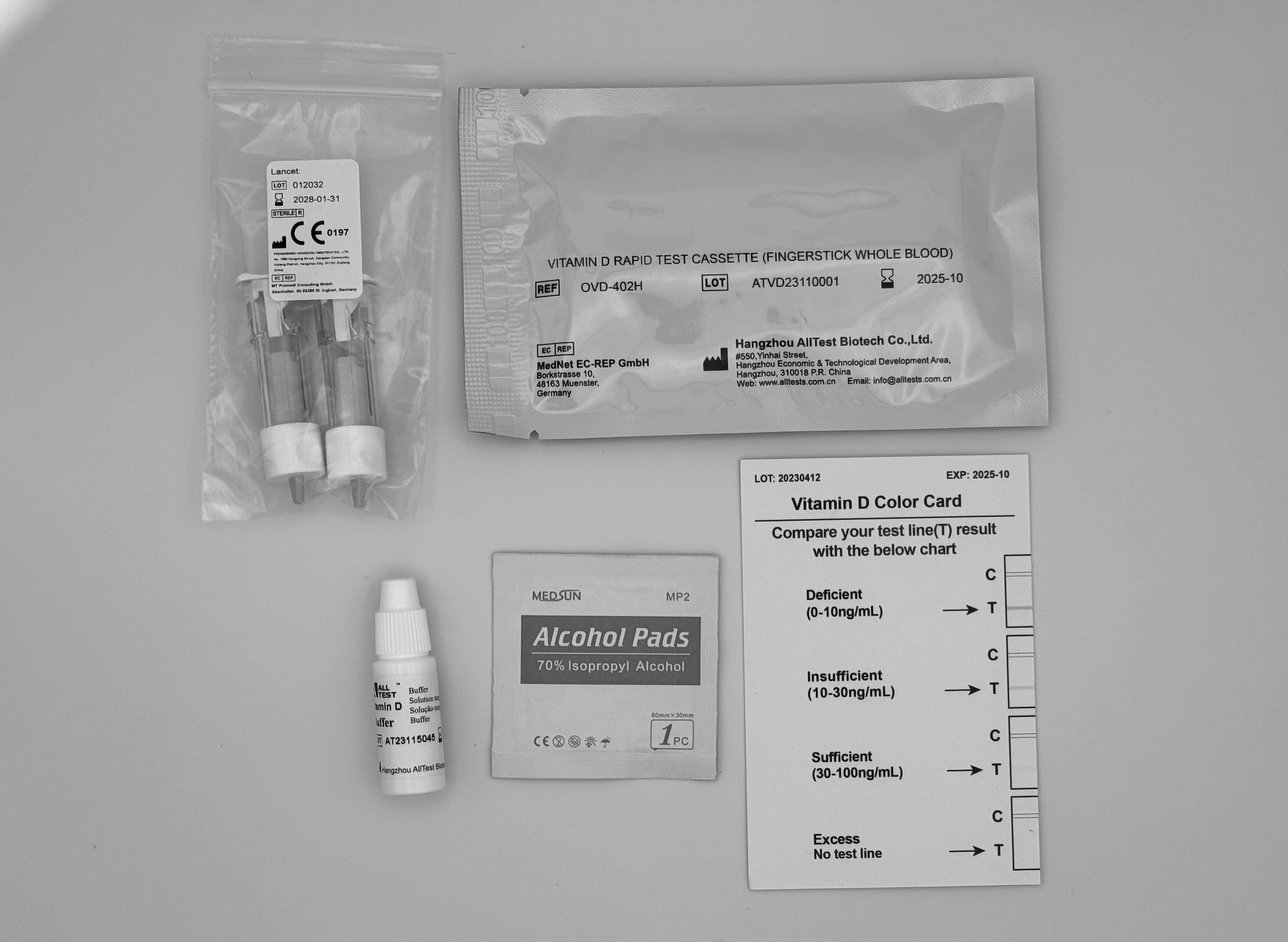
Read the result at 10 minutes and compare the strength of the T-line with the color chart on the exact same package. Do not interpret the result after 20 minutes.
- Deficiency: 0–10 ng/mL (0–25 nmol/L)
- Insufficient: 10–30 ng/mL (25–75 nmol/L)
- Sufficient: 30 to 100 ng/mL (75 to 250 nmol/L)
- Possible excess: A C-line is visible but a T-line does not form; consult a doctor
- Void: C-line missing; new test with new cassette

What does an abnormal result mean?
According to the test, a deficiency or insufficient result means a 25(OH)D concentration of less than 30 ng/ml. Show the result to a healthcare professional, who will assess the need for a laboratory test and possible vitamin D supplementation. An adequate result does not rule out all causes of symptoms or a rare excess of vitamin D.
How accurate is the test?
In a clinical comparison of the manufacturer’s 90 whole blood samples, the overall accuracy of the test compared to the reference device was 94.4%. The accuracy of the deficiency area was more than 99.9%, the inadequate range 94.6% and the adequate range 93.3%. The result can be distorted by, for example, too low blood volume, incorrect buffer count or incorrect reading time.
What does the package contain and how do I store it?
The package includes a test cassette, buffer, lancet, alcohol swab, capillary pipette, colour chart and instructions for use. In addition, you will need a timer. The product is a CE 0123 marked medical device for home use. Store the package in a dry place between 2 and 30 °C, do not freeze. Use the cassette within one hour of opening the foil pouch.
Read more about vitamin D and Finnish intake recommendations on the Finnish Food Authority’s vitamin D page. Read more about other health tests.
Order a vitamin D test when you want to get a preliminary estimate of your 25(OH)D level at home in 10 minutes.